Showing posts with label atheism. Show all posts

Monday, December 11, 2017

Today's Kinder, Gentler Atheism

This is another excerpt from my upcoming book, Mere Science and Christian Faith: Bridging the Divide with Emerging Adults. When I mention that I specialize in religion and science and, to some degree, the study of emerging adulthood, people often ask about whether the growth of the those professing no religious affiliation (i.e., the "nones") means a growth in atheism. My response is well summarized in the quote below from a student.
“I think most people are neutral—‘It’s cool if you believe it.’ If they want to believe, more power to ’em.” Amanda, age 19, atheist
Overall I don’t often encounter the sneer and hard-edged approach to Christian faith that
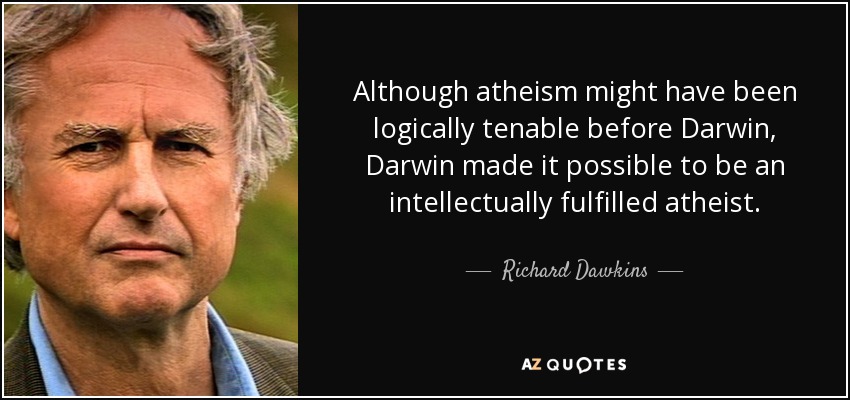
Richard Dawkins emits and embodies. The key value I find in eighteen- to thirty-year-olds is tolerance. The attitude of atheist students today is kinder and gentler than that of my Berkeley classmates in the eighties, who seemed intent on disproving my faith.

In addition, it’s important to note that these New Atheists don’t speak for all scientists. Consider what one nonreligious scientist had to say about Dawkins
“He’s much too strong about the way he denies religion. . . . As a scientist, you’ve got to be very open, and I’m open to people’s belief in religion. . . . I don’t think we’re in a position to deny anything unless it’s something which is within the scope of science to deny.”
This leads me to conclude that the future of science and religion will have a bit less antagonism even if, increasingly, our country will look beyond the church to figure out how to bring the two together. (Unless, of course, a large contingent of the church changes its course and stops rejecting mainstream science. But that's a subject for another blog...)

Friday, September 19, 2014

A Brief, Fragmentary Post (Or Maybe Riposte) From and On C. S. Lewis

Continuing in my series of blogs with excerpts from my new book on C. S. Lewis. This one is a bit of a fragment...

C. S. Lewis once remarked that the contemporary atheists of his day made him embarrassed for atheism, especially as he remembered his beloved tutor, William “Kirk” Kirkpatrick. “The anonymous donor who now sends me anti-God magazines hopes, no
WWCS? What Would Clive Say?
doubt, to hurt the Christian in me; he really hurts the ex-Atheist. I am ashamed that my old mates (which matters much more) Kirk’s old mates should have sunk to what they are now.” (Surprised by Joy, 139). 

Would this atheist turned apologist have some rejoinders for the atheism we find today? I think I know where he’d begin. 

In Lewis’s primary works (particularly from the ‘40s), I have discerned a four-part apologetic structure. First of all, in order to even begin steps toward belief, we have to see that there is more to the world than just material stuff. Lewis argues that naturalism or materialism, which is the idea that there is just brute matter, is self-defeating because rational thinking is impossible if we are pure materialists. Secondly, having established that there is more than nature, Lewis proceeded to something more personal or existential—by which I mean ideas that relate to our existence. Human beings seek something that this world cannot satisfy, which points to a God beyond this world. (Lewis established what he called the numinous and later identified with his own quest for joy.) Next, if there is something more than this world has to offer, Lewis moved toward the argument that, like the laws of nature, there exists a law or rule about right and wrong (or the law of nature). It is perceived in the conscience of all human beings and points to the God who created that law within us. Put another way, joy and beauty are tied to morality. Finally, his argument becomes specifically Christian: Jesus Christ is, not only the fulfillment of human myths, but also of our human quest for joy and moral truth. Lewis argues that Jesus must be one of three options: liar, Lord, or lunatic. Lewis concludes that the only reasonable answer is that he is Lord.