Showing posts with label religion and science. Show all posts

Thursday, August 18, 2022

Reflections on Studying Science and Religions in a Pluralistic World

This is a mini excerpt from my upcoming book, Science and Religions in America: A New Look. Feel free to pre-order!

If there's a way I lean, it's toward a collaboration between science and religion.

Nevertheless, out of a commitment to honestly, I've also learned that there are some major differences between the two. I’ve mentioned in various places "New Atheists" scientists like Jerry Coyne and Richard Dawkins. They see a very deep chasm between religion and science, and they assert that they, as scientists, rely on experimentation and rationality, an approach that just doesn't connect with many people who fit into a religious mindset. At the same time, many influential religious voices in our country are not particularly supportive of modern science, like thought leaders of the conservative Christian movement, such as Jerry Falwell, Jr. or Franklin Graham, who yet command the attention of millions while standing against much of the consensus of science.      

There is no one relationship of science and religions that could categorize and summarize all people. 


In the search for collaboration, it would also be convenient to find a universal common thread of wisdom that all the greatest minds in science and religion seek. For my part, I'd like to fully concur with the philosopher and scholar of mystical thinking Ken Wilbur, who commented when on the founders of quantum mechanics, “they investigated the physical realm so intensely looking for answers, and when they didn’t find these answers, they became metaphysical.” Even more, he added, “These physicists became deep mystics not because of physics but because of the limitations of physics” (quoted in Steve Paulsen, Atoms and Eden: Conversations on Religion and Science.)


I am drawn to with what astrophysicist Marcelo Gleiser wrote, 

Scientists should engage with the mystery of existence, inspired by a deep sense of awe and filled with humility. If science is seen this way, many more will be ready to embrace it as one of the highest expressions of the human spirit.

But frankly, I do struggle with how widespread this sentiment is. And I'll leave it there for this post... 

What do you think? (Hint: there's also more in the final chapter of the book.)

Friday, July 17, 2020

More on the Indelible Mark of Religion and Science on America

An overview (and almost a thesis)

Our country has often exhibited a dialectical relationship with science and religion, often expressed with rationality and order in conversation with feeling and intuition. In historian James Gilbert’s view,

Science and religion “are words suggesting two great and opposing philosophic systems—materialism and idealism—that, in a variety of forms, operate as polarities in American culture.” James Gilbert

A tension—sometimes creative, sometimes contentious—exists between these two forces, which of course continues to the present day and finds its way into any number of cultural flash points, such as, Who do we trust during the COVID-19 pandemic? Can anyone make me wear a mask? Does it make sense to send kinds back to school?

Is this feeling vs. reason?

One of theologians Robert Jenson’s comments (as he unfolds the thought of the Puritan philosopher and theologian Jonathan Edwards) struck me,

“America has been more than other nations undone by alternate fear of science itself and capitulation to usually jejune science-inspired ideologies.” Robert Jenson

For a nation as unusually religious as ours—we are outliers as a developed country—any uneasy antiphonal response to science merits attention.


ANW’s insights

To use the scientist and philosopher A. N. Whitehead’s categories, as Americans we are often poised between “the force of our religious intuitions, and the force of our impulse to accurate observation and logical deduction.” Far too often, we seem to feel a compulsion to decide between them.


From the citation, it would sound perhaps that religion is solely emotional. And that notion is worth challenging. Whitehead does later comment in a chapter from Science in the Modern World devoted to “Religion and Science,”


Religion is the vision of something which stands beyond, behind, and within,

the passing flux of immediate things; something which is real, and yet waiting

to be realised; something which is a remote possibility, and yet the greatest of present facts; something that gives meaning to all that passes, and yet eludes apprehension; something whose possession is the final good, and yet is beyond. A. N. Whitehead


That is to say religion seeks to put us in connection with a broader Reality behind the material reality we immediately see. But this isn’t simply an emotion—it’s an intuition of Something or Someone greater than we are.


“Proceed with caution” ought to guide us as we decide how to define science and religion.

Friday, July 03, 2020

Reasons to Doubt the Alleged Inherent, Persistent Conflict between Science and Religion

It's not hard to find various statements--often really, extended slogans--about the inherent, persistent "conflict" or "incompatibility" between science and religion. They're often philosophically suspect and historically weak. 
Maybe that's why l've learned about these atheist slogans seems to have very little discernible effect. 
I thought I'd start with at least one of the key historical problems with these assertions.
The Scientific Revolution of the 16th and 17th was started largely by Christians like Copernicus, Kepler, Galileo, Newton. (Of course, not only Christians were involved, but a lot them were.) They didn't seem to have a problem, a conflict between their faith and science. In fact, as many have argued, it was their belief that God created a cosmos and not a chaos that led them to seek what the laws and structure of this cosmos is. That revolution, joined by the Enlightenment and the Reformed, create the seedbed for the growth as our country, and many American voices carried forward these insights. These were Christians who integrated  their faith with “natural philosophy” (the name for "science" until the early 19th century) like 18th century Puritan philosopher and pastor Jonathan Edwards, the Harvard botanist Asa Gray, the American agricultural scientist and inventor George Washington Carver, and Gerty Cori, the Czech-American biochemist who became the third woman—and first American woman—to win a Nobel Prize in science, and the first woman to be awarded the Nobel Prize in Physiology or Medicine for her discovery of her discovery of glycogen metabolism. This isn't a full-blown rebuttal, but sufficient grounds to create one.
Now to a more contemporary one...
"Ok, the link between religion and science may have worked in the past, but as we know it's not working now." As a response, I think of Jennifer Wiseman and Francis Collins (both of whom I've mentioned many before in this blog). 
But why not highlight John B. Goodenough? He's the father of the lithium-ion battery, the rechargeable power source inside your mobile phone or laptop, and a Christian. In 2019 this University of Texas at Austin Professor Emeritus of Engineering was awarded the Nobel Prize in Chemistry for his work at Oxford University. 
As University of Wisconsin at Madison biologist (and friend) Jeff Hardin writes, 
"I'm sure each Nobel recipient is interesting in his own right, but to me Goodenough is the most fascinating of the three. His quirky humor comes through in interviews, and he has the distinction of the being the oldest recipient of a Nobel prize in the long history of the program. Goodenough is doubly significant for me because he is a Christian, as his fascinating autobiography, Witness to Grace, makes clear.

Goodenough himself has this to say,
“Scientific knowledge is a means to power, power to extend the limits of our existence, to challenge fate; but it also provides the means to subdue, to terrorize, to destroy. Science teaches why things are the way they are and how to use this knowledge to achieve a specified goal; but it does not distinguish between the moral qualities of the human goals this knowledge serves. For that, another discipline is needed! …For the religious person, what gives meaning to life is our walk with that which is eternal; the beauty of holiness inspires the choice of our service to the humanity in all people; dialogue with the Spirit of Love as well as with nature is sacred…”
Slogans are so easy to take recourse in. But the truth, though often much less neat, is so much more interesting.

Thursday, May 21, 2020

A Post You Should Probably Read


This post excerpted from my book


To define is to separate and, one hopes, to clarify. Sometimes, however, definitions also create problems. Do religion and science represent two clearly definable two things? Lurking in this blog may lie a desire to reify science and religion as one thing each because then we would have a singular relationship between them. And who wouldn't want that? If we simply could help these two dance in a beautifully orchestrated duet, life might be beautiful. But that convenient pairing was a convenient fiction, a useful heuristic device.


Even more, I often use the terms science and religion--and even  faith when I'm referring more specifically to the Christian faith--but I haven't really defined those terms, and so I decided to start to rectify the situation here... at least by noting why those definitions are problematic and complicated.


Not until 1833 did the Cambridge University historian and philosopher of science William Whewell coin the term "scientist" to replace such terms as "cultivators of science." Indeed, even today there is no one Science with a capital S. In fact—as is the case in French and other languages, but not in English—we would do better to refer to “the sciences” (or less sciences) or the “science of x,” such as physics, biology, or—to follow Thomas Torrance— even the “science of theology.” A.D. Ritchie offers this in his Studies in the History and Methods of Sciences, 

“There is no Science in the singular, for there are only sciences.” 

And “There is no one scientific method that is universally applicable.” A.D. Ritchie

The failure of the Logical Positivists in the 1920s to sustain their assertion of verification and then Karl Popper’s later revision, also a failure, to promote falsification demonstrate that the “scientific method” of fourth grade science fairs provides no real aid in comprehending what scientists actually do. By the middle of the twentieth century Thomas Kuhn’s “paradigm shifts” and Paul Feyerabend’s Against Method (a book title that apply describes its ethos and tone) further solidify the chaos. For my part, I’m most convinced by Imre Lakatos’s “research programme” as well as Peter Lipton’s Inference to the Best Explanation as meditating theories between the putative Scientific Method and scientific anarchy, which I’ll simply note for now.


Despite these challenges, defining science represents the less complicated side of the ledger. The term religion also has no single consensual definition in the academic guild, nor among its practitioners. The classic five “world religions” of Judaism, Christianity, Islam, Buddhism, and Hinduism all tolerate at best an uneasy relationship with the moniker religion. For example, Stephen Prothero has written, “One of the most common claims among Hindus in the West is that ‘Hinduism is a way of life’ rather than a religion … Sanatana Dharma (Eternal Law),” and many Christians will say that their faith is “a relationship, not a religion.” And when one includes Native American cultures, the discussion becomes particularly intriguing. Severin M. Fowles has noted that there is no good word for “religion” among the Southeast Pueblo peoples, but instead the best rendering is “doing,” and so he titles his study of their practices and beliefs, An Archaeology of Doings. 


I’ll stop there, but the citations could certainly be multiplied. It is no less difficult to find an accepted definition among scholars such as Alister McGrath who, in his introduction to religion and science, was provoked to concede, “there is no generally accepted definition of religion.” 


While I appreciate McGrath’s intellectual humility, I cannot take recourse to this approach in this blog. My thoughts will await another post, but for now I leave with this question, "What do you think is the meaning of science and of religion?"

Thursday, February 27, 2020

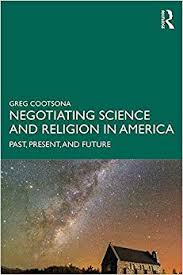
Review of "Negotiating Science and Religion"

Dan Barnett reviewed by book, Negotiating Science and Religion in America. Here's an excerpt (and you can go here for the full review.)

"In 1966 physicist Ian Barbour, who graduated from Yale Divinity School, proposed four ways science and religion meet each other. Yes, there has been conflict between the two, but also they’ve been seen as independent knowledge systems. At times they have been in dialogue with each other. And there is also the possibility of 'integration.'

Cootsona writes that such a model no longer fits what is happening among emerging adults. Religion has morphed into 'spirituality' (many who report no religious affiliation — the 'nones' — consider themselves spiritual) and emerging adults are creating 'interactive networks' through technology that draw beliefs from many traditions in an increasingly pluralist context. Religion is not one thing and neither is science. There is 'negotiation' on the personal level.

This collaboration shows itself in many of the vexing issues young adults must deal with as they become tomorrow’s leaders. Genetic manipulation ushers in the 'specter of eugenics'; there is climate change, sexuality, artificial intelligence, transhumanism, the nature of race.

In these challenges Cootsona, in his ground-breaking and optimistic work, discerns a 'unique American vitality' found in the interplay of the sciences and religions."

Thursday, February 13, 2020

Sexy Science? A Finalist for Key Topics in Science and Religion

Appropriately enough, this post arrives just the day before Valentine's Day. Science does in fact weigh in on what lies behind romance, and right off the bat, here's a timely article, "The Science of Love and Attachment."

The science of sexuality is also the second-to-last on my Top Eleven List of Topics in Science and Religion (adapted, by the way, from my book Negotiating Science and Religion in America) as I look at themes that are trending and that I plan to address in future posts.

#10. Science of Sexuality
At a conference a few years back on religion and science, I heard a colleague's work in which he analyzed the insights of science on our sexuality. He entitled it, "Sexy Science." 


That's not a bad title, and probably beneficial for future book sales (should his work become a book). Most important, it's not entirely off-base. Although we used to think science wasn’t that sexy, that’s changed. In fact, one of the unexpected results that arose in my qualitative interviews with emerging adults (18-30 year olds) is their conviction that sexuality, gender, and sexual attraction are clearly part of what science and religion need to consider.

In one of my hour-long interviews with an undergraduates on her views, Terry, who grew up Catholic, told me she had moved away from her family's religion because it didn't take in contemporary science. (You can read more about these interviews and the related surveys on religion and science with 18-30 year olds here.) 

And Terry put her own "done-ness" with Christianity quite bluntly: 
Sexual orientation "is proven in science that you don’t choose to be gay. Denying that makes you look ignorant.” Terry, 19 year old undergraduate
And this was not a stand-alone. But it was a surprise. In fact, one of the unexpected reactions to these interviews with twenty-somethings was that when I mentioned "religion and science," the response "sex" emerge frequently, probably as much as any other expected topic, like evolution, and certainly more than others I've discussed over years like, quantum cosmology and how the methods of science and theology interrelate. Put another way, topics previously considered secondary have become primary. And yet the themes of sexuality and gender, and particularly their relationship to science and religion, have not made it into textbook-length treatments of core issues in standard textbooks, because, most likely, these sources move more gradually.

I move to two conclusions.

My first conclusion is an observation: sex is a trending topic of science and religion because the importance is self-evident for emerging adults (18-30 years old). And we have to take in that fact. At the same time--and I've written a bit more about this elsewhere--I'm convinced that science should not entirely define this subject--or really, set of subjects that I'll put under "sexuality and gender"--like many other ethical or values topics. Good science should certainly inform, but not dictate, our ethics. And, I'll simply note here that bundled with sexual orientation is certainly gender identity and sexual ethics, topics that religions have certainly talked about and expressed their opinions.

My second conclusion is a set of questions: Are religious communities that reject gay and lesbian members or participants bigoted and scientifically ignorant? Will this tying of sex, science, and religion together make churches more resistant to engage for fear of controversy? What is the proper way to bring together science with biblical and theological convictions? And if we analyze why we are attracted to our valentine, does that steal away all the fun?

It is indeed a brave new world, but I believe we have already entered it, and we need to take in that reality. 

And one final note: That's the second to the last of my Top Eleven, briefly noted, and I’m confident that you’ll have much more to add on this particular topic!

Thursday, January 30, 2020

A Third Party in the Dialogue of Science and Religion

Number 8 from the Top Eleven List of topics in science and religion adapted from my book Negotiating Science and Religion in America

It used to be that the conversation between science and religion involved just two parties. But t
echnology has become increasingly crucial in dialogue of science and religion. In fact, for a robust and relevant conversation today, we have begin by taking in the omnipresence of cell phones, laptops, video conferencing, social media, etc., especially as we consider science, especially for emerging adults. 

Simply put, 18–30 year-olds have only known a technologically-saturated world. The presence of technology (and specifically the internet) is the main reason many call the generation born 1995-2012 "iGen." Topics in technology then must be brought to the top three or four topics in science and religion where scientific and theological method, interactions with evolutionary biology, and cosmology once reigned supreme. And why not just call it Science, Technology, and Religion in the process?  

One of these topics is Artificial Intelligence or AI. What is is it? Science Daily defines AI
“The study and design of intelligent agents where an intelligent agent is a system that perceives its environment and takes action which maximizes its chances of success.” Science Daily, Artificial Intelligence
This naturally leads to transhumanism, a term Julian Huxley coined in 1967 to describe the belief that the creation, development, and use of technology will improve human physical, intellectual, and psychological capacities. Transhumanism is hot: Popular culture loves to speculate about what it might mean in the future years. Consider films like Her (about a man who falls madly in love with an operating system) and Ex Machina (about the creation of a beautiful, and ultimately, deadly robot, Ava). 
Ava pondering herself in Ex Machina


And then there's Ray Kurzweil’s vision, which promotes "a Singularity" where artificial intelligence (AI) and human thinking will merge by 2045. Indeed this would take humankind toward something like omniscience. But something, according to Kurzweil, will arrive first: AI will pass the famous Turing Test, a rubicon when computer intelligence or AI and human intelligence are indistinguishable. 

In a 2017 Futurism article, Kurzweil was quoted as follows: 
“2029 is the consistent date I have predicted for when an AI will pass a valid Turing test and therefore achieve human levels of intelligence. I have set the date 2045 for the ‘Singularity’ which is when we will multiply our effective intelligence a billion fold by merging with the intelligence we have created.” Futurist Ray Kurzweil
Furthermore, from this Singularlity, Kurzweil seeks a form of immortality by uniting our (or at least his) brain with the cloud and living forever. I am fascinated by this drive toward immortality as it brings to mind whether religions are indelibly invested in the afterlife. Will religions survive if human beings can survive indefinitely? Put another way, if we can be saved by technology do we need also God to do it? 

And I'm full of questions. Second, is it really possible for an AI to pass the Turing Test and thus become indistinguishable from human intelligence? If so, does this mean we have become creators and therefore like God (Genesis 3:22)? 

Finally, what does AI imply for the existence of the soul? If an artificial intelligence machines seem to us to be interactive and self-reflective, do they have souls? Or maybe neither of us have souls.

These are hot topics, and in this post, I've pushed the scary questions. In my mind, they are worth pondering, especially since high-tech firms are investing mounds of financial capital to produce increasingly impressive AI. And, as these rapidly advancing fields expand, they will create questions with significant implications for those who seek to integrate contemporary technology and science with Christian faith. 

As indeed I do.

Thursday, August 01, 2019

Notes on the Terms "Natural Philosophy" and "Scientist"

When this blog takes up topics of "religion and science," it's fascinating to note that historically these have not been fixed terms. In that light, here are few notes:

Science did not exist as a discrete field for most of American history (and of course for centuries before that). It wasn't until 1834 that the Cambridge University historian and philosopher of science William Whewell coined the term scientist to replace cultivators of science (and the like). More on that in a movement... Until then, Latin was the language of the scholars, and the Latin word for knowledge, scientia, covered a variety of disciplines. In fact, what we 
generally call "science" today was previously natural philosophy.

This shift in naming had collateral effects. In his brief treatment of the advances in science between Copernicus's ground-breaking work on heliocentricism in 1543 and Newton's iconic Principia Mathematica in 1687, the Johns Hopkins University historian of science Lawrence Principe offered this pithy analysis in his succinct The Scientific Revolution:
"Natural philosophy is closely related to what we familiarly call science today,
Recommended read!
but is broader in scope and intent. The natural philosopher of the Middle Ages or the Scientific Revolution studied the natural world—as modern scientists do—but did so within a wider vision that included theology and metaphysics. The three components of God, man, and nature were never insulated from one another." Philosopher of Science Lawrence Principe
Changing the name also signaled a shift in scope.

As I mentioned above, in 1833 the Rev. William Whewell (1794-1866), English polymath—poet, astronomer, philosopher of science, among other things—coined many hybrid terms, ion, anode, cathode, but especially scientist in the same paragraph in which he coined physicist. Interestingly, Whewell sought to avoid gender connotations of the phrase man of science for at least two reasons: first of all, because of its appearance in a positive review of Mary Somerville’s On the Connexion of the Physical Sciences, and secondly because of “the newness of Somerville’s endeavor—her attempt to connect all the physical sciences with one another.” (See Renee Bergland's Maria Mitchell and the Sexing of the Science.)

This new word scientist also signaled that the practice of what we know today as “natural science” was becoming sufficiently complicated in the 19th century that it needed specific practitioners and that it had therefore drifted away from the kind of common sense science. This is partly the story of the specialization of academic fields that breaks apart the unity of knowledge. At any rate, as a result, the study of nature now became increasingly difficult for those outside this newly coined cadre to evaluate. Non-specialists need not apply! 

Thus scientific specialists begin to dominate the conversation of how, or if, God can be found through science.

How else this change the conversation about science and religion? I'd be interested to know what you think.

Thursday, July 18, 2019

C. S. Lewis and ETs

Remember this guy from Spielberg's 1982 movie?
I just finished a review of Olli-Pekka Vainio's Cosmology in Theological Perspective: Understanding Our Place in the Universe (which I quite liked) for the Journal of Inkling Studies, and I thought it might be worth adapting a slice of the review for this blog.

Vainio's book adapts C.S. Lewis's ideas
-particularly his work in intellectual history (such as his brilliant posthumous 1964 The Discarded Image)--as he reflects on the theological implications of contemporary cosmology, especially the implications of extraterrestrial life, or ETs. 

Lewis and exoplanets? Why not? Even if, we've discovered over 4000 planets outside our solar system since CSL died in 1962.

Lewis offers to Vainio’s project a serious critique of “chronological snobbery," namely,

what is newest is best and the past essentially is always surpassed by what's most recent. Instead Lewis demonstrates that past thinkers, despite what they didn't know about exoplanets, have a great deal to teach us. In fact, I learned from Vanio that the existence of ETs isn’t something that just happened since the somewhat recent explosion of exoplanets discoveries. Medieval thinkers, who used other names for intelligent life in addition to angels and human beings. (Lewis employed the term longaevi, for example.) As a result, the medieval writers and thought leaders pondered other worlds. Even more, Enlightenment commentators assumed their existence. 
“From the early eighteenth century on, it became widely accepted that life on other planets was at least possible.” Theologian Olli-Pekka Vainio
Lewis made it clear that, when human beings look at the cosmos, they "are standing at the steps of a magnificent cathedral, which welcomes them inside." "The heavens," as it were, "declare the glory of God" (Psalm 19:1). This becomes, in the best sense of the word, a religious experience. And here I imagine CSL at the Kilns, pondering the night sky through the telescope he set on his bedroom's balcony, perhaps reciting the Psalter. 

Or as Vainio phrases it, 
“A proper Christian attitude toward the cosmos is one of awe and wonder—and the desire to understand it more deeply." Theologian Olli-Pekka Vainio

Thursday, June 27, 2019

My Upcoming Book on Science and Religion in America in Summary Form


Negotiating Science and Religion in America

Here's the current 930-word summary of my upcoming 70,000 word book, set to be published in early 2020.

In 1925 the Harvard philosopher-scientist Alfred North Whitehead stated that the future of our civilization depended, to some degree, on how effectively we were able to relate science and religion, which he described as

“the force of our religious intuitions, and the force of our impulse to accurate observation and logical deduction.”
And thus the burden of this book: If indeed religion and science are central to the America, where is their future relationship? (This would be a worthwhile question without its centrality, but that fact intensifies the need for an answer.) What do we do with the fact that about seventy percent of Americans see ultimate conflict between the teachings of science and religion, but that same percentage of believers don’t see science conflicting with their faith? The past provides us with a guide to the present.

I begin with an introduction, which highlights Whitehead’s 1925 Challenge. I then outline the subsequent chapters. In chapter two, I define key words. For example, the definitions of science and religion don’t map exactly onto our usage. (The word scientist, for example, was not coined in 1830s.) I then adapt Ian Barbour’s iconic typology of how to relate the two: conflict, independence, and integration. Finally, despite challenges, I use the relation between science and religion as a way to understand American cultural life and the common good that we promote to define our country.

I sketch the answer out to how we've related science and religion in three phases: past, present, and future.

The past I define as approximately 1687 to 1966, with a division of 1859 in between, which comprise chapters three and four. I freely admit that every historical division is clunky, somewhat arbitrary, and therefore distorting; nonetheless, I am employing three publication dates, Isaac Newton’s Principia (1687), Charles Darwin’s Origin of Species (1859), and Ian Barbour’s Issues in Science and Religion(1966). Between Newton and Darwin, the United States was officially founded, and in that time, it maintained a tensive relationship between rationality and religious affections, to use Jonathan Edwards’s term. It was a period marked by an Enlightenment rationality, featured prominently in our nation’s core documents, while at the same embodying a warmth of emotional life no less characteristic of America. In fact, I look at Edwards as an exemplary thinker who employed his impressive intellectual skills to hold together these two American cultural forces, even as the early eighteenth century First Great Awakening was booming. I contrast Edwards with Thomas Paine, who saw no way to combine rationalism with revealed religion, which marked our Revolutionary period. Grasping these two is an affective way to understand America culturally. In the early eighteenth century, though largely a time of cultural contentment with combing science and religion, especially through Baconian induction and Scottish Common Sense realism, one can discerns signs of a brewing discontent.

Then, in chapters five through seven, I note that the Civil War interrupted the early reception of Darwin, and then chart what happened post-Darwin through to the modern study of science and religion with characters such as Andrew Dickson White, John William Draper, Charles Hodge, and Asa Gray, as well as events like the rise of eugenics, modernism, the fundamentalist-modernist split, and the 1925 Scopes Trial. Here the United States was coming of age intellectually and culturally, and continued to find an uneasy relationship with a variety of impulses. Put another way, both religious expansion and scientific advances such as relativity and quantum theories—sometimes worked in alliance, sometimes in antagonism, and sometimes in contented independence—and this blend marked a period of about a hundred years from 1859 to 1966.

For the present, I begin in chapter eight with Barbour’s 1966 Issues because—at least for the academic study of religion and science—this book defined the field. It emerged in the massive splintering that characterizes the Sixties when the Christian church became increasingly disestablished, and a variety of religious traditions more mainstreamed. Barbour helped us understand a more nuanced and effective approach to religion and science (than, for example, White’s), even if scholar now see its significant limitations. During these years, we saw the emergence of ideas that broaden the dialogue, such as Capra’s The Tao of Physics and the Gaia Hypothesis. Chapter nine takes us to the new millennium (a term I like because it sounds so grand) and analyzes the early twenty-first century interaction of religion and science through three key voices, Stephen Jay Gould, Richard Dawkins, Francis Collins.

The final part peers into the future (which started somewhere around the second decade of the twenty-first century), by first—in chapter ten—analyzing research from key scholars on emerging adults’ attitudes about religion and science (seasoned with my own interviews and surveys), as signposts for the future. Chapter eleven analyzes these views as a way to discern the contours of these future directions of science and religion in the United States: first of all, a world of new topics in science and religion—in which evolution and creation will be present, but concerns about topics such as sexuality, climate change, AI, and transhumanism will rise in importance. I then note some trends: the decreasing influence of the Christianity and the further splintering of American religious life, a modest rise in atheism and agnosticism with a marked increase of the religious nones, and finally, a decreased antipathy in the interaction of science and religion.

I offer some final thoughts in an epilogue and include two appendices: this, a summary of the book; and my notes on the ten topics today and for the future of science and religion.

Thursday, January 10, 2019

Science and Religion in the United States

More from the book on science and religion that I'm currently writing...

To some, religion is solely emotional. And that notion is worth problematizing, especially when we set “religion” (as diverse a category as that is) with “science” (not much more specific, really). Whitehead comments in a chapter devoted to “Religion and Science” in his book Science and the Modern World that 

Religion is the vision of something which stands beyond, behind, and within, the passing flux of immediate things; something which is real, and yet waiting to be realised; something which is a remote possibility, and yet the greatest of present facts; something that gives meaning to all that passes, and yet eludes apprehension; something whose possession is the final good, and yet is beyond all reach; something which is the ultimate ideal, and the hopeless quest. (A. N. Whitehead, Science and the Modern World)

That is to say, religion seeks to put us in connection with a broader Reality behind the reality we see. It is not simply an emotion, but an intuition of Something or Someone greater than we are.
      
As I noted a moment ago, some might say that science and religion set up the contrast between “head” and “heart.” That idea is somewhat distorting—since, at least minimally, we know that emotions and rationality are intertwined and take place in various functions of our wonderfully complex and often chaotic brains—and yet that contrast begins to bring us to the right position in understanding our heritage in the United States. Historically, we want either to be warmed in our feelings about the world around us—to see meaning and order and beauty—or to have our thinking kindled—to analyze the particulars of how things fit together.

The eminent historian of American religion Claude Welch labels the three main threads in the eighteenth century “pietism, rationalism, and romanticism.” In my view the former and latter are both cut from similar human cloth where Romanticism is often a secularized religion, and rationalism is the thread of science in our culture.
      
If we imagine science (or rationality) on one pole and religion (or feeling) on the another, some have fully given themselves to one pole or its other; many tend toward one as a major, and the other as a minor theme; and some have been able to bring the two together, or at least hold them in a dialectical tension. 
      
The story I’m telling in the book I’m writing is this: To bring us to the present, and then the future, of religion in the United States, where no generation ever arrives at fixed relationship between these two cultural forces (or sets of forces), but in which we continually negotiate how religion and science will relate.

As historian James Gilbert wrote in his study of religion and science in the United States,

The dialogue between science and religion in America expresses essential ideas and deep-seated structures of culture. It reveals a theological problem and a profound concern of philosophy; it also shapes a significant portion of everyday popular culture. It provides categories for thinking about modern existence: to structure the world as divided between science and religion, or to imagine it united with their convergence. (James Gilbert, Redeeming Culture: American Religion in the Age of Science)

If I am convinced that we have done best as a country when we have held both religion and science together, it’s related to my conviction that human beings are at their best with this same combination. My interest, however, is to observe more than to promote. And a way of understanding this is to ask how these two cultural forces interrelate, as well as to chart them on this spectrum the key thinkers and movements. And yet, it almost immediately becomes more complicated because those who privilege science and rationality may seek to bring feeling under its aegis. 
      
To take in the intellectual history of the United States in this way necessarily means that “science” and “religion” are often symbols in wider cultural currents and not only what scientists and religious leaders practice and teach about. What we today call “science” and “religion” doesn’t map exactly onto our history. In the case of the eighteenth century, these two weren’t even separate disciplines and certainly “science” as a discrete field did not exist. It was often called “natural philosophy” or more simply “science” from the Latin word for knowledge, scientia. Not until 1834 did Cambridge University historian and philosopher of science William Whewell coin the term “scientist” to replace such terms as “cultivators of science.”

And this places us in an uneasy relationship with the two today.

Thursday, January 03, 2019

"New Year, New You?" A New Year, And An Enduring (and Quite Captivating) Topic

Two early resolutions for a new year
It is common practice to look at a new year and make resolutions.

Here goes for 2019. I resolve to start this year’s posts by looking back. Right now on the
left side of my blog you’ll find the top ten list from 2018—that is, which blog posts had the most readership. By and away the most viewed was “A Parable that Arrived Bit too late.” In it, I describe the surprise at how the Greek I learned at UC Berkeley worked just fine at Princeton Seminary, but the science I took in was often rejected by the church. 

This shock really led me to spend the last three and half decades or so, working to put those two together for others and hoping to tell others what I’ve learned. On that note, have my online course on how to relate mere Christianity and mainstream science?

Another result of this question is that I’m writing a book on the past, present, and predicted future state of religion and science in the United States. I imagine many posts will circle around the set of topics I’ll be writing. So I suppose that’s my second resolution for today.

And this leads me to a brief meditation.

A brief meditation on religion and science in the U.S.
America has always had a dialectical relationship with science and religion, that is to say, with rationality and order, as well as feeling and conversion. And if I began by reflecting on 18thcentury European settlements in the East (e.g., the Pilgrims), it is even anachronistic to speak of “America” or “the United States.” Nonetheless, a dialectical—and sometimes contentious—relationship exists between these two forces, which of course, continues to the present day.
      
This comment by theologian Robert Jenson’s comments (as he unfolds the thought of Jonathan Edwards) struck me, 
“American has been more than other nations undone by alternate fear of science itself and capitulation to usually jejune science-inspired ideologies.” Robert Jenson, America’s Theologian: A Recommendation of Jonathan Edwards
For a nation as unusually religious as ours—we are outliers as a developed country with a far higher degree of religiosity than any other—an uneasy antiphonal response to science merits our attention.
      
To Alfred North Whitehead’s categories for religion and science, as Americans, we are often poised between 
“The force of our religious intuitions, and the force of our impulse to accurate observation and logical deduction.”(A.N. Whitehead, Science and the Modern World)
If this is at all accurate, how do we bring the two together as Americans? Let me know what you think. I'll be working with these theme in the early part of 2019