Showing posts with label Buddhism. Show all posts

Friday, November 20, 2020

The Buddha: Enlightened or Awakened?

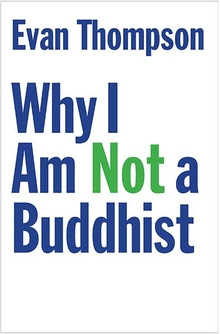
I'm reading a fabulous book by Evan Thompson on Buddhism, and particularly its relationship with science, Why I am Not a Buddhist.
Here's one tidbit.

Thompson is a 
philosopher who's spent considerable time in Buddhist communities, including conversations with the Dalai Lama. Even if not himself a Buddhist (as the title clearly states), he considers himself "a good friend to Buddhism." 

On to an historical note... Max Müller, in the 19th century, shifted the  translation of "the Buddha," from "Awakened One" (which is closest to the Sanskrit verbal root, budh, meaning "to awaken") to "Enlightened One." That shift is significant. Thompson states that it provided a way to make the Buddha's life fit with ideas of enlightenment swirling around in Europe at the time.

The problem for us (especially those who don't speak Sanskrit) is that when we think about "enlightenment," Immanuel Kant and the Age of Enlightenment come to mind. It was Kant who declared that we must throw off our "self-imposed tutelage," and thus (to put it in contemporary slang) "find our true self."

But the Buddha found that there was no self, and that realization is the basis of achieving nirvana... that was his awakening. The problem then, especially when we contemplate forms of science, is how Buddhist meditation and its awakening connects with neuroscience. 

Enough to ponder for this post...


Saturday, October 31, 2020

Science and Two Ethical Systems: Buddhist and Christian

Buddhist ethics and science
In his brilliant book, 
Morals Not KnowledgeJohn Evans has argued that 
“Religion and science are the two great ways of understanding the world, but by understanding I mean the relationships between humans in the world and the relationship between humans and nature. These are stuff of morality….” John Evans
Even more, Evans asserts when conflict between the two occur, the lion’s share happens at the level of “morals, not knowledge” (and thus the title of the book).

This conflict obviously rears its head for many with "God or evolution." Since that's often true in our country, where Christianity is the dominant religion, what about Buddhists? The simple answer: they don’t carry this burden, partly because they don't believe in a Creator God. 81% of American Buddhists accept evolution. Pew Research states quite simply, 
“Many Buddhists see no inherent conflict between their religious teachings and evolutionary theory. Indeed, according to some Buddhist thinkers, certain aspects of Darwin’s theory are consistent with some of the religion’s core teachings, such as the notion that all life is impermanent.” Pew Report
I mention this because if one begins with the connection of all sentient life, like Buddhism does, then it’s not hard to links to evolutionary thought. In fact, the Buddhist scholar Inoue Enryo argued that Buddhism can embrace evolutionary thought because it holds to “no sharp distinction between humans and animals as Christians claim….” 

Moreover, it’s therefore no grand step to the Buddhist commitment to ahimsa, or non-violence, for all sentient beings. This, of course, can come into conflict with scientific research, especially animal testing. In their research collected in the book, Science and Secularity, Elaine Howard Ecklund and her colleagues quoted a Taiwanese biologist commenting, “Buddhism is about not killing.” 

Christian ethics and s
cience
Recently, when I was talking with a pastor who heads a Hispanic Christian ministry, he told me this, “Many Latinos drive trucks. And, in the next ten years, those jobs will be lost to Artificial Intelligence. I want to encourage my flock to be creating AI.” The effects of technology and science often displace jobs, and so we arrive at justice, one of the ethical foundations of Christianity (which it, of course, adapts from its Jewish roots).

Many believers see Christianity, like many other religions do, as a way of life, not ultimately intellectual content. Again to draw from Evans, “Evolution versus creation,” for example, isn’t ultimately about doctrine, in this view, but about the implications for ethics. Does the theory of natural selection lead us to see all people as simply the products of blind, undirected processes? Not really, as I've posted before, but that's where the conflict starts.

Among other insights from her social scientific research, Ecklund has similarly highlighted that Christians are particularly drawn to sciences that involve healing—i.e., ethical action in the world that reduces suffering. In her book Why Science and Faith Need Each Other, Ecklund observes that Christians and non-Christians both express “a great deal of confidence in medicine.” This correlates with a focus on Jesus, who is reported in the Gospels to be a healer. As Ecklund observes,
"Jesus’s ministry on earth involved touching those whom others would not touch, healing those whom others thought were beyond healing. Christians holding this theological view can see medical technologies as created by God for us to use to relieve our suffering and the suffering of others." Elaine Howard Ecklund
Philip Clayton has highlighted stem cell research, warfare technology, CRISPR gene editing, and he reserves his attention for global climate and sets Christianity within the “three Abrahamic faiths [which] go back… to the Book of Genesis, which calls believers to cultivate care for the earth.” Nature for them is “a creation of God and therefore a thing of great value.” This indeed leads to ethical action not simply for other humans, but for the Earth.

Thursday, September 24, 2020

Buddhism: Cosmology, Emptiness, and the Big Bang

When I mention to various Christians that I teach about other religions, they often say, "Tell me about it!" And so here's goes--here's something brief about Buddhist views of the cosmos and modern science.
Nothing
Buddhist scholars tell me it's all about nothing. And this reminded me of how 
Seinfeld became a TV hit in the early 2000s for a being a show “about nothing.” Maybe the show was on to something with its emphasis on nothing.

But first let's get the words right. The key words is shunyata, or emptiness. More specially, the Sanskrit Śūnyatā can be translated as "devoidness," "emptiness," "hollow, hollowness," "voidness." It is the form of noun form from the adjective śūnya, meaning "zero," "nothing," "empty" or "void." It comes from the root śvi, meaning "hollow,” plus tā, which means "-ness." (Monier-Williams, 2nd ed., 1899, A Sanskrit-English Dictionary)

This teaching of emptiness is found especially in Madhyamaka (the “middle way”). Moreover, it has resonance with quantum physics. As William Ames has commented, 
“We recall that in quantum theory many of the properties of, for instance, an electron are not intrinsic to the electron itself. They depend not only on the electron but also on the type of experiment that is being performed.” William Ames
This is commonly described through the famous two-slit experiment. Ames continues with another observation, 
“In Madhyamaka, too, attributes are relational and no intrinsic. A dharma by itself has no nature, any more than an electron can in itself be said to be either a wave or a particle.” William Ames
Not just nothing, but zero
The Buddhist focus on nothing and emptiness has at least one other significant contribution. And here again I turn to Dr. Veidlinger, my colleague at Chico State University, 
“The zero was developed in India, in connection with philosophical speculation about emptiness, and it is the Indian number system that was adapted by the West that lead to the notation used in the modern scientific world.” Daniel Veidlinger
The Big Bang and Buddhism
So far, so good. But, Big Bang cosmology might be a problem, at least according the Tibetan Buddhist leader, the Dalai Lama.
“From the Buddhist perspective, the idea that there is a single definite beginning is highly problematic. If there were such an absolute beginning, logically speaking, this leaves only two options. One is theism, which proposes that the universe is created by an intelligence that is totally transcendent, and therefore outside the laws of cause and effect. The second option is that the universe came into being from no cause at all. Buddhism rejects both these options. If the universe is created by a prior intelligence, the questions of the ontological status of such an intelligence and what kind of reality it is remain.” (Dalai Lama, The Universe in a Single Atom)
Ok, now a question
What do we do with in a world where Big Bang cosmology has become a standard? Let me know what you think?

Thursday, September 10, 2020

What Can We Learn From Buddhists On How to Engage Science?

I've heard this a number of times over the years in a variety of contexts: “Science tests until it finds truth, while religions never change their ideas because they rely on faith, and faith is based on very old texts that can't be updated.”

This common slogan challenges any believer, but it also has some obvious errors. Not all religious traditions emphasize faith, and so an anti-religious cavil against “faith” can represent a category error. Buddhism, for example, focuses on enlightenment, since indeed the word Buddha has as its root “enlighten” or “awaken.” I suspect it's for this reason, and probably many others, that the relationship of Buddhism and science will continue to draw interest, e.g., the Dalai Lama’s The Universe in a Single Atom: The Convergence of Science and SpiritualityBuddhism and Science: Breaking New Ground, edited by B. Alan Wallace, and more recently, Robert Wright’s, Why Buddhism is True: The Science and Philosophy of Meditation and Enlightenment.

This leads to the question of faith in sacred texts and how these texts relate science and scientific inquiry. As I noted above, many argue that religions necessarily possess an anti-rational or fideistic element in that their texts always look back. Science, in contrast, continually looks forward. 

In this respect, Buddhism offers an openness to change its teachings based on new information that sounds scientific to many ears.
"Do not go upon what has been acquired by repeated hearing; nor upon tradition; nor upon rumor; nor upon what is in a scripture; nor upon surmise; nor upon an axiom; nor upon specious reasoning; nor upon a bias towards a notion that has been pondered over; nor upon another's seeming ability. Rather, when you yourselves know that these things are good; these things are not blamable; undertaken and observed, these things lead to benefit and happiness, then and only then enter into and abide in them." Buddha from the Kalama Sutra (ca. 250 BC)
And more recently, the Dalai Lama,
"Suppose that something is definitely proven through scientific investigation, that a certain hypothesis is verified or a certain fact emerges as a result of scientific investigation. And suppose, furthermore, that that fact is incompatible with Buddhist theory. There is no doubt that we must accept the result of the scientific research." Dalai Lama
As a Christian living in this scientific and technological world, I think all religions and their followers could learn from these Buddhist convictions. In addition, I believe we could also listen to Galileo, who 
(following Augustine) presented an analogous guideline over 400 years ago when speaking about his new, Copernican theory in light of his detractors' comments.
 
"I hope to show that I proceed with much greater piety than they do.... For Copernicus never discusses matters of religion or faith, nor does he use argument that depend in any way upon the authority of sacred writings which he might have interpreted erroneously. He stands always upon physical conclusions pertaining to the celestial motions and deals with them by astronomical and geometrical demonstrations, founded primarily upon sense experiences and very exact observations. He did not ignore the Bible, but he knew very well that if his doctrine were proved, then it could not contradict the Scriptures when they were rightly understood." Galileo, Letter to the Grand Duchess Christina (1615, my italics)
Galileo essentially says that, yes, we follow our ancient texts, and if our best science finds something about the physical world, our biblical interpretation and application should cohere with these findings. This makes a great deal of sense when you consider that Galileo was arguing for a sun-centered universe.

Put another way, there is one God who wrote the Two Books, one of Scripture and one of nature. Reason doesn't have to lie down to sleep when faith enters the room.

What do you think? Is there a similarity? And do you agree?