Tuesday, June 17, 2014

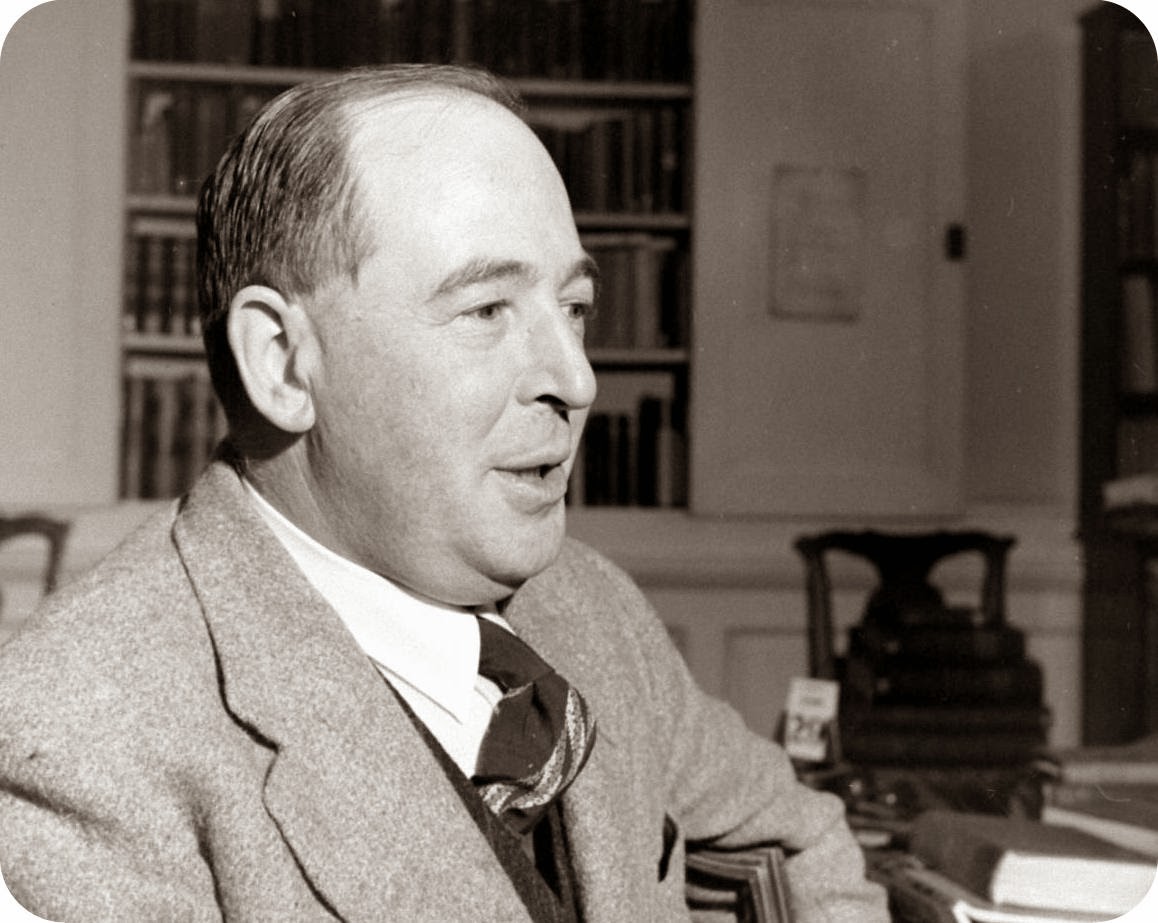
C. S Lewis and Science: A Sktech and a Blog Entry

I continue to work on this theme of how C. S. Lewis interacted with science... maybe it'll grow up to become an e-book someday. In any event, here's a sketch of the major ideas.

The first thing we have to say on the topic of C. S. Lewis and science is that Lewis was no scientist. He did not hold a degree in science, and even famously had troubles with mathematics—so significant in fact that these deficiencies almost prevented his entrance into Oxford. (This fact is something of a surprise considering his mother held a masters degree in math.)
      
We might conclude concede that there is nothing to say specifically on the topic of C. S. Lewis and Science.
      
Nonetheless, Lewis did discern a rising tide of scientific thought that set itself against Christian belief and that sought to remake western civilization. Here science did not promote its findings per se, but offered them as the basis for a philosophical change… or put differently, a transformation of worldviews. This worldview would be mechanistic, thus materialistic, and therefore implicitly atheistic. It would not only destroy the basis for Christian belief, it would also implicitly deny the need for literature (which, of course, was Lewis’s great passion and his professional discipline).
      
So, in this sense—of science as the basis for a worldview—Lewis had plenty to say, and the topic winds its way into a considerable percentage of what he wrote.
      
I would therefore like to unfold the topic of C. S. Lewis and science more systematically.
  • First of all, using Lewis’s 1954 inaugural address at Cambridge, Lewis summarized decades of reflection and expressed grave concerns about the growth of the Machine, especially man as a Machine, and the way it set a new course in the West for intellectual development, or really in his view, degradation.
  • This realization, which had been building for decades, led him to make three interlocking moves in his apologetic work, that is, in his defense of Christianity, and more broadly, his defense of the humanities as the basis for a sound worldview. The first of these moves was to argue that the materialistic philosophy was self-defeating. Materialism, according to Lewis, left no place for true thought, or put another way, thought that led to truth.
  • The next move was to demonstrate that this materialist philosophy was existentially unsatisfying. Materialism left no place for joy, for what Aristotle called human flourishing.
  • He then continued by arguing that all human cultures implicitly hold to an objective standard of right and wrong. This Lewis took as a sign of God’s character and of the way God created this world.
  • Lewis concluded that science had a rightful place in intellectual work and in the development of the West, but had no right to determine all truth and knowledge. Scientific materialism diminishes our humanity and distances us from the earth. Instead, Lewis argued that belief in a Creator God offered the best alternative, which also left a substantial place for the humanities in Western culture.      
In sum, Lewis’s thoughts on science interest me as a scholar of Lewis and therefore have considerable relevance for his vast readership. Though formulated over fifty years ago, they also have some considerable contemporary relevance as we continue to face onslaughts from those who promote scientific materialism as the final arbiter of truth and rationality.

Tuesday, June 10, 2014

The Problems of Science and the Machine

One of the finest pieces that C. S. Lewis ever delivered was his November 1954 inaugural lecture for his chair at Cambridge in medieval and renaissance literature (which, in many ways, they created for him). He considers the periodization of western thought. Not only is he one of the first I’ve read to describe post-Christendom and its effects, but he also highlights (as I’ve mentioned at other times in this blog) “the birth of the machine.” As he put it simply, “It alters Man’s place in nature.” The rise of the metaphor of the world—and therefore us—as a machine has great consequences for how we understand the relationship between science and religion. For one thing, it leads us to believe that scientists are mechanics, studying and analyzing machine-like objects. It also places a distance between us and nature.
      
As I’ve thought more about this topic of the growth of the machine, I do think Lewis hit the taproot of much of what has altered the relationship of faith and science. Yes, it’s not science per se, it’s that science has given us a different picture of ourselves because the model of life as a machine works so well. It certainly is inadequate for biology—despite how the metaphor of a processing unit has expanded into how we understand consciousness and thus ourselves. It's beginning to have its effects on how we understand the brain and the mind—in this case, that the machine is a computer that “processes” information and that is engaged in “uploading” and “downloading.” The metaphor of the machine probably doesn’t work that well for physics either. 
      
The metaphor also therefore changes our place with nature. Lewis lamented the growth of the machine. RenĂ© Descartes famously described humanity as “masters and possessors of nature.” Put another way, living in a technological world has distanced us from true, good human values and thus from nature. The reader of Lewis’s fiction finds this exemplified in N. I. C. E., National Institute for Co-ordinated Experiments, from That Hideous Strength, a depiction I find telling, but somewhat overwrought. A better example can be found in one of his most notable poems, “The Future of Forestry,” where Lewis describes a world that has forgotten the beauty of the forest, and thus of nature, in its headlong pursuit of technological advance, and of roadways. (I am reminded of the work of Lewis’s friend and fellow Inkling, Tolkien, who placed in the hands of Saruman, the evil wizard, the destruction of the forests for the sake of production.)
How will the legend of the age of trees
Feel, when the last tree falls in England?
When the concrete spreads and the town conquers
The country’s heart;…

These problems derive from scientific materialism, the assertion that this world is all there is, that we and the world around us are a machine, and that science has demonstrated this fact. Lewis looked toward a re-enchantment of the world through myth and story to bring us to the place where we can find joy. For these reasons, it might be worth reconsidering the effect and effectiveness of the rise of the machine.

Saturday, May 31, 2014

Genetic Determinism, Materialism, Freedom, with a Coda by C. S. Lewis

Excerpted from this book
Click here for more info
Put simply, Christians believe God created us and our world. We can remain open as to how God accomplished it. I find no scientific argument that disproves God’s creation. With that assertion in mind, I now turn to one such counter-arguments: that genetic determinism proves neither we nor Adam have the ability to make free choices. To that argument I now turn. 

God is free. We, as bearers of God’s image, possess freedom. We as creatures are called to respond to God, to choose right over wrong. For that, we need freedom. At least that is our tradition…. But are we really free? Determinism—the philosophy that everything we do has been programmed by forces beyond anyone’s control—has supplied a recurring motif in the history of ideas. In the early nineteenth century, Pierre-Simon de Laplace stated baldly:

An intelligence knowing, at a given instance of time, all forces acting in nature, as well as the momentary position of all things of which the universe consists, would be able to comprehend the motions of the largest bodies of the world and those of the lightest atoms in one single formula, provided his intellect were sufficiently powerful to subject all data to analysis; to him nothing would be uncertain, both past and future would be present in his eyes?

This suggests that everything, from a decision to marry to the outcome of the battle of Waterloo, has been fated.
        
Today determinism is back in a new form and tied with the revolutionary discoveries in genetics. The world-famous scientist, Francis Crick, who co-discovered DNA, has laid down the gauntlet for those who defend the existence of human freedom. He comments on the title of his well-known book:

The Astonishing Hypothesis is that “you,” your joys and your sorrows, your memories and your ambitions, your sense of personal identity and free will, are in fact no more than the behavior of a vast assembly of nerve cells and their associated molecules. As Lewis Carrolls’s Alice might have phrased it: “You’re nothing but a pack of neurons.”
        
If Crick is right, then we have some problems with our sense of freedom. In fact, it does not exist. And without freedom, we also have problems establishing ethics. The Christian tradition has located the ability to transcend our human, bodily limitations through the notion of the soul. Unsurprisingly, Crick subtitled the book, “The Scientific Search for the Soul.” Theologians have used “soul” and “spirit” for this component of the human being. For simplicity’s sake, I will stick with “soul.” The soul offers us freedom and the ability not just to be determined by our body. How then can we respond to Crick?
        
Of the many ways to refute his position—or most forms of determinism—the easiest is this: it is self-defeating. In a playful phrase, the biologist and theologian, Arthur Peacocke has labeled the position “nothing buttery.” (Remember Crick’s rephrasing of Alice: “You’re nothing but a pack of neurons.”) Take Crick’s argument to its conclusion. If our thinking processes are “nothing but” the interaction of bio-chemicals in the brain, then we have no way if what we know is true. It just is. We might as well call the size of our feet or the color of our hair “true.” They are simply facts, neither right nor wrong. This makes Crick’s wonderful discoveries “nothing but” the movement of electrical charges in his predetermined brain. But in fact, we know that some genetically-influenced behavior patterns—a tendency toward violence or alcoholism—are not beneficial. Crick does not offer any means for assessing or responding to them.
         
Thankfully, we are not stuck with genetic determinism—or any determinism for that matter. Our faith has long taught that we are not just our bodies, but that our soul offers us transcendence from bodily processes, giving us freedom. Scientifically-minded theologians talk about the soul as a capacity for transcendence and freedom rather than a “thing” that can be located through scientific experiments. In addition, Crick’s arguments rest on reductionism, the notion that the workings of any system can be reduced to its smallest parts. But reductionism misses the point. Ted Peters, a theologian constantly exploring the effects of science on belief, has summarized it this way: “Determinism at the genetic level does not obviate free will at the person level. Genetic determinism just like all conditions of finitude place each person in his or her particular situation, readying the person to exercise freedom.” Our genetic makeup set the boundaries for our choices—not choices to “do anything” (as we often want freedom to mean). Our genetic structure is the chord structure over which we improvise our lives.


Coda excerpted from this book
Click here for more
A coda: I think this is what C. S. Lewis was getting at when he criticized the scientific atheism of the 1940s. The specific reason Lewis rejected the “Scientific Outlook” lies in the self-defeating nature of the two claims “we can think” and “nature is all there is.” Here we come to a key theme: the Scientific Outlook asserts the truth and reasonableness of its claims without thereby providing a place for reason. Or as he phrased it:
If minds are wholly dependent on brains, and brains on biochemistry, and biochemistry (in the long run) on the meaningless flux of the atoms, I cannot understand how the thought of those minds should have any more significance than the sound of the wind in the trees.

Lewis called this atheistic science, "the Scientific Outlook." He conclude that it tries to fit in reason in an irrational—or maybe arational—world. Lewis concludes that this move is self-defeating.
         
As an alternative, Lewis discovered in his own life (around his conversions in 1930 and 1931) something he argues here: Belief in a Creator God who endows humanity with reason makes entirely more sense. The divine Logos creates human reason. The primary Cause undergirds all secondary causes. Lewis says that is why he does not believe in the “Scientific Outlook,” but instead believes in Christianity, which includes reason and science. As he closes the lecture, he writes,

Christian theology can fit in science, art, morality.... The [atheistic] scientific view cannot fit in any of these things, not even science itself. I believe in Christianity as I believe that the sun has risen: not only because I see it, but because by it I see everything else.

Lewis believed that Christian theology gave grounds for reason and thus reasoning about what is true. It’s a vision of life that makes sense of all experience, and therefore it makes sense of science.

Monday, May 12, 2014

C. S. Lewis on Science and the Rise of the Machine

Why care what C. S. Lewis had to say about science, a topic that his filled the past few posts? In one sense, this theme could seem to border of the trivial. Lewis—though a renowned scholar in his field of Medieval and Renaissance literature—had no particular insight into scientific discoveries. His inability to grasp mathematics, which almost caused him not to be accepted at Oxford—is well-known. We might decide the subject has little to offer and move on.
     
But I demur. Why? Lewis, as an intellectual historian, engaged science because he knew its effect on, and contributions to, Western European culture. When Cambridge University asked him to deliver the inaugural address in 1954 for the newly-formed chair he was to occupy there, he spoke on the historical epochs in western thought. He noted that the greatest change occurred as Europe became “post-Christian” and particularly, not when science arose in the age of Copernicus and Galileo, but when western culture took on the metaphor of the birth of the machine. “Between Jane Austen [1775-1817] and us [1954],” Lewis comments, “but not between her and Shakespeare [d. 1616] … comes the birth of the machine.” The west had displaced a more organic or sacramental view of the world with that of clock, or more generally, a machine. And Lewis notes that with this concept emerging from scientific thought arose the notion that old is inferior to the new.

      
For today, I have only two notes: This demonstrates that it isn’t often science qua science that determines its effects on culture. It’s more often the worldview that emerges. It also tells us something about 2014. Does this “birth of the machine” lead us to Ray Kurzweil and transhumanism, particularly the idea that we will achieve a technological singularity in which artificial intelligence can upload an entire human brain/mind into an immensely powerful computer? I suppose I wouldn’t be the first to note that once we make human beings a machine, it’s not a far leap that they become infinitely improvable and therefore upload-able.

Wednesday, May 07, 2014

C. S. Lewis, Jesus Christ, and Science (Some Notes)

I’ve been thinking about C. S. Lewis and science recently, and this week I’m teaching my Lewis class and exploring his famous September 1931 discussion with J. R. R. Tolkien and Hugo Dyson where he realized that Jesus is the “true myth.” This conversation moved Lewis from life as a broad theist to a confessional Christian. It also affected his writing and the way he presented a defense of specifically Christian faith—that is to say, the faith in Jesus Christ as Lord and Savior. 
      
As I’ve written in other posts, there were three specific arguments that Lewis made against the dominant scientific thought of his day: the self-defeating character of materialism, the desire for something beyond this world as a pointer to God, and the law of right and wrong in human beings that indicates the existence of a moral God. These three led to his famous argument that appears in Mere Christianity: the “trilemma”—that Jesus is liar, lunatic, or Lord.
      
So now to Lewis and science: Can this be seen as a “scientific” argument? Or perhaps better, is this a dialogue with science? So far as I can discern, this latter question divides into two. Because Lewis is effectively asking us to make an historical judgment about the character of Jesus of Nazareth, it can be phrased this way: Can science comment on history? Secondly, is it scientific to think about such an ultimate category as God’s identity being determined by one event (albeit an event of thirty plus years of Jesus’s life)?
      
I’ll start with the second question. Generally, science deals with the general laws, and so to reason scientifically would be not to think that something as ultimate as God could be discerned through a particular historical event. And that word “historical” in my last sentence pretty much answers the first question: certainly there are forms of science, like archeology, that can make judgments on historical events, but at the end of the day, the “science” we usually mean—natural, and sometimes behavioral, sciences—are structurally different than the science of history. (And now I’m using “science” to mean mainly “academic discipline.”)
      
For that reason, I’d conclude (at least for the moment) that Lewis sought not to contradict good science with his trilemma, but he moves beyond the bounds of what we usually call scientific thought.

      
But then again, should science (at least, the natural sciences) be the arbiter of every truth? Lewis, we can be sure, would have responded with a quite confident No. And that thought might lead to another, later post…

Wednesday, April 30, 2014

A Few Notes on C. S. Lewis and Science

As I read him, Clive Staples Lewis (1898-1963), probably the most famous Christian apologist of the 20th century, presented a four-step apologetic. I want to note in what ways this apologetic engages science with Christian faith. Though the final step argues that Jesus is God—which is not strictly speaking a scientific concern—the first three steps confronted the scientifically based philosophy of his early 20th century Oxford. I could also argue that they resonate into 21st century American culture as well. 


But I’ll restrain myself on that last point. Instead, let me outline those first three steps:
  1. First of all, there is more to the world than just material stuff. Materialism (that there is just brute matter) is in fact self-defeating because, if we are pure materialists, rational thinking is impossible. Lewis’s book Miracles principally presents this apologetic, but it is scattered throughout his writings, especially in the ‘40s.
  2. Human beings seek something that this world cannot satisfy, which points to a God beyond this world. “If I find in myself desires which nothing in this world can satisfy, the only logical explanation is that I was made for another world.”  This argument appears in The Problem of Pain and in “The Weight of Glory.”
  3. There is a Law or Rule about Right and Wrong (or the Law of Nature, or even natural law) that exists in all human beings and points to the God created that law within us. Lewis developed this apologetic in his opening Broadcast Talks for BBC, which became the first section or “book” of Mere Christianity, as well as his 1943 Riddell lectures later published as The Abolition of Man.

      
Let’s look at #2 for a moment: Lewis’s argument from Joy or desire. The argument brings to mind the question of whether Albert Einstein’s words about “God” were really about, well, God, such as “everyone who is seriously involved in the pursuit of science becomes convinced that a spirit is manifest in the laws of the Universe—a Spirit vastly superior to that of man.” Richard Dawkins argues (not surprisingly as the arch-atheist) that this stuff in Einstien isn’t really about God, it’s about transcendence. In his recent book, scientist Amir D. Aczel, contends (as I understand him) that, no, this is really about the Deity, and in fact, believing in God is profoundly compatible with science.
      
So I'm going to set Lewis in this fray. What is he saying? Is he arguing that this sense of transcendence—or better, this desire for it, which Lewis calls “Joy”—proves God? No, at least not as a deductive proof. Instead Lewis is making a suppositional argument here: We do not fully understand the desire for something beyond (or Joy) itself, but it opens to a wider metaphysical conclusion, one that points to God who created us. Or more systematically, the form of this suppositional argument from desire proceeds as follows: Suppose God created this world, we can imagine that God would leave a desire for more than this world offers. We experience a longing for more than this world offers. It is reasonable to see this as pointer to God.
      
In a certain sense then, the argument cannot be decided on the basis of science or not. Science seeks to understand the interactions of the material world. And yet, many scientists, because they focus their lives on the interactions of the material world, believe that this world is all there is.
      
Like my title says, these are notes. Nothing fully conclusive yet. But I’m interested to know what you think…

Friday, April 25, 2014

C. S. Lewis and Karl Rahner on Jesus and Evolution

In the final section of his most famous book, Mere Christianity, C. S. Lewis relates the nature of Christ, as the Second Person of the Trinity, with evolution. Lewis poses the question: What is the Next Step in Evolution? Lewis writes, 
the Next Step has already appeared. And it is really new. It is not a change from brainy men to brainier men: it is a change that goes off in a totally different direction—a change from being creatures of God to being sons of God. The first instance appeared in Palestine two thousand years ago.
This Next Step is voluntary and thus, unlike previous stages in evolution, can be missed. Lewis uses evolution as a way to talk about the inbreaking of the new aeon in Christ.

Lewis’s BBC broadcast talks, which became this section of Mere Christianity, took place in 1943. About three decades later, one of the greatest 20th century Catholic theologians, Karl Rahner, wrote about “Christology within an Evolutionary View of the World.” Rahner sees the whole of creation moving toward God’s immanence in the world. He summarizes what this means for evolution and Christ, 
The point of the thesis that we are trying to establish is this: although the hypostatic union [that Jesus Christ is both God and man] is a unique event in its own essence, and viewed in itself is the highest conceivable event, it is nevertheless an intrinsic moment within the whole process by which grace is bestowed on spiritual creatures.
Rahner views the incarnation as a final, definitive instantiation of what God has been doing through the process of evolution. (This has a ring of Teilhard de Chardin about it.)

I’ll leave it there for the moment. As I contemplate doing some research over the coming months on Christology and science, I’m interested by the difference of approach between these two seminar Christian thinkers.