Wednesday, May 07, 2014

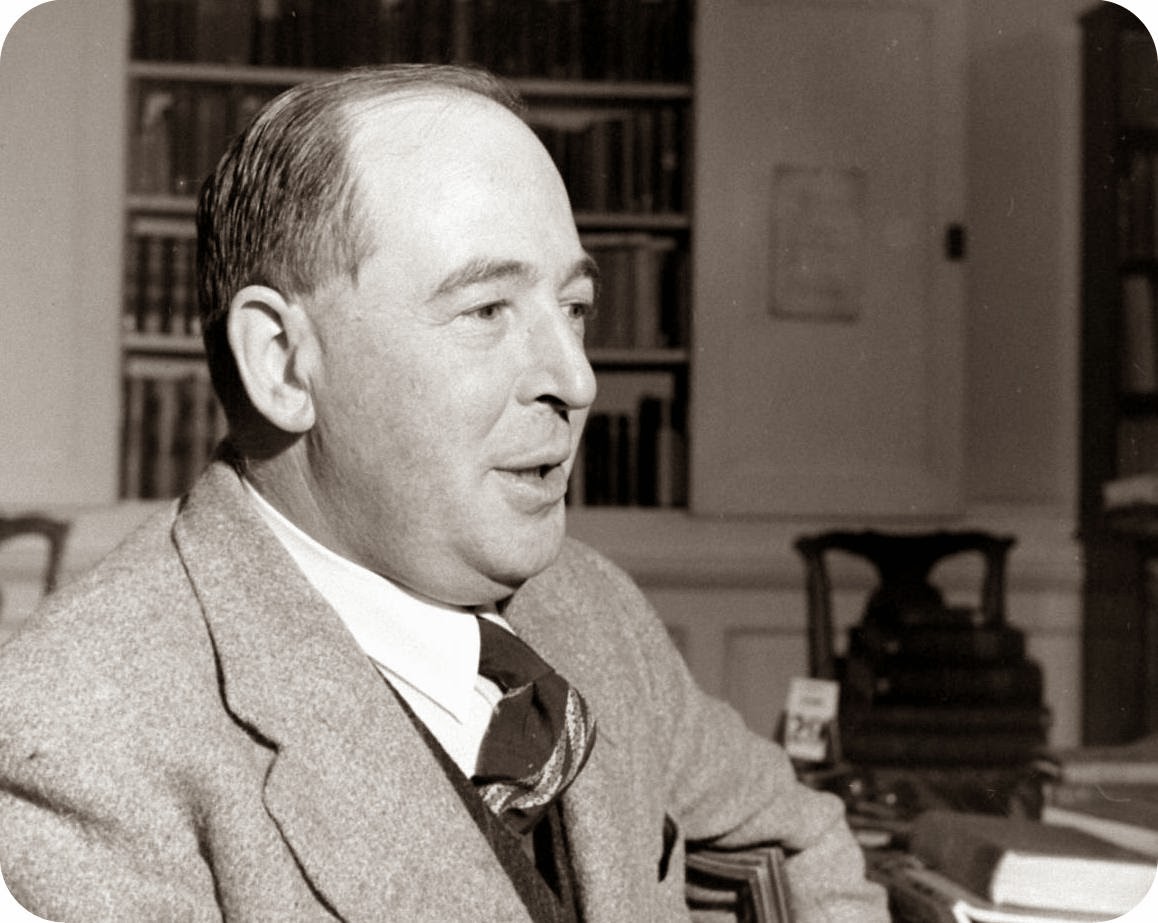
C. S. Lewis, Jesus Christ, and Science (Some Notes)

I’ve been thinking about C. S. Lewis and science recently, and this week I’m teaching my Lewis class and exploring his famous September 1931 discussion with J. R. R. Tolkien and Hugo Dyson where he realized that Jesus is the “true myth.” This conversation moved Lewis from life as a broad theist to a confessional Christian. It also affected his writing and the way he presented a defense of specifically Christian faith—that is to say, the faith in Jesus Christ as Lord and Savior. 
      
As I’ve written in other posts, there were three specific arguments that Lewis made against the dominant scientific thought of his day: the self-defeating character of materialism, the desire for something beyond this world as a pointer to God, and the law of right and wrong in human beings that indicates the existence of a moral God. These three led to his famous argument that appears in Mere Christianity: the “trilemma”—that Jesus is liar, lunatic, or Lord.
      
So now to Lewis and science: Can this be seen as a “scientific” argument? Or perhaps better, is this a dialogue with science? So far as I can discern, this latter question divides into two. Because Lewis is effectively asking us to make an historical judgment about the character of Jesus of Nazareth, it can be phrased this way: Can science comment on history? Secondly, is it scientific to think about such an ultimate category as God’s identity being determined by one event (albeit an event of thirty plus years of Jesus’s life)?
      
I’ll start with the second question. Generally, science deals with the general laws, and so to reason scientifically would be not to think that something as ultimate as God could be discerned through a particular historical event. And that word “historical” in my last sentence pretty much answers the first question: certainly there are forms of science, like archeology, that can make judgments on historical events, but at the end of the day, the “science” we usually mean—natural, and sometimes behavioral, sciences—are structurally different than the science of history. (And now I’m using “science” to mean mainly “academic discipline.”)
      
For that reason, I’d conclude (at least for the moment) that Lewis sought not to contradict good science with his trilemma, but he moves beyond the bounds of what we usually call scientific thought.

      
But then again, should science (at least, the natural sciences) be the arbiter of every truth? Lewis, we can be sure, would have responded with a quite confident No. And that thought might lead to another, later post…

Wednesday, April 30, 2014

A Few Notes on C. S. Lewis and Science

As I read him, Clive Staples Lewis (1898-1963), probably the most famous Christian apologist of the 20th century, presented a four-step apologetic. I want to note in what ways this apologetic engages science with Christian faith. Though the final step argues that Jesus is God—which is not strictly speaking a scientific concern—the first three steps confronted the scientifically based philosophy of his early 20th century Oxford. I could also argue that they resonate into 21st century American culture as well. 


But I’ll restrain myself on that last point. Instead, let me outline those first three steps:
  1. First of all, there is more to the world than just material stuff. Materialism (that there is just brute matter) is in fact self-defeating because, if we are pure materialists, rational thinking is impossible. Lewis’s book Miracles principally presents this apologetic, but it is scattered throughout his writings, especially in the ‘40s.
  2. Human beings seek something that this world cannot satisfy, which points to a God beyond this world. “If I find in myself desires which nothing in this world can satisfy, the only logical explanation is that I was made for another world.”  This argument appears in The Problem of Pain and in “The Weight of Glory.”
  3. There is a Law or Rule about Right and Wrong (or the Law of Nature, or even natural law) that exists in all human beings and points to the God created that law within us. Lewis developed this apologetic in his opening Broadcast Talks for BBC, which became the first section or “book” of Mere Christianity, as well as his 1943 Riddell lectures later published as The Abolition of Man.

      
Let’s look at #2 for a moment: Lewis’s argument from Joy or desire. The argument brings to mind the question of whether Albert Einstein’s words about “God” were really about, well, God, such as “everyone who is seriously involved in the pursuit of science becomes convinced that a spirit is manifest in the laws of the Universe—a Spirit vastly superior to that of man.” Richard Dawkins argues (not surprisingly as the arch-atheist) that this stuff in Einstien isn’t really about God, it’s about transcendence. In his recent book, scientist Amir D. Aczel, contends (as I understand him) that, no, this is really about the Deity, and in fact, believing in God is profoundly compatible with science.
      
So I'm going to set Lewis in this fray. What is he saying? Is he arguing that this sense of transcendence—or better, this desire for it, which Lewis calls “Joy”—proves God? No, at least not as a deductive proof. Instead Lewis is making a suppositional argument here: We do not fully understand the desire for something beyond (or Joy) itself, but it opens to a wider metaphysical conclusion, one that points to God who created us. Or more systematically, the form of this suppositional argument from desire proceeds as follows: Suppose God created this world, we can imagine that God would leave a desire for more than this world offers. We experience a longing for more than this world offers. It is reasonable to see this as pointer to God.
      
In a certain sense then, the argument cannot be decided on the basis of science or not. Science seeks to understand the interactions of the material world. And yet, many scientists, because they focus their lives on the interactions of the material world, believe that this world is all there is.
      
Like my title says, these are notes. Nothing fully conclusive yet. But I’m interested to know what you think…

Friday, April 25, 2014

C. S. Lewis and Karl Rahner on Jesus and Evolution

In the final section of his most famous book, Mere Christianity, C. S. Lewis relates the nature of Christ, as the Second Person of the Trinity, with evolution. Lewis poses the question: What is the Next Step in Evolution? Lewis writes, 
the Next Step has already appeared. And it is really new. It is not a change from brainy men to brainier men: it is a change that goes off in a totally different direction—a change from being creatures of God to being sons of God. The first instance appeared in Palestine two thousand years ago.
This Next Step is voluntary and thus, unlike previous stages in evolution, can be missed. Lewis uses evolution as a way to talk about the inbreaking of the new aeon in Christ.

Lewis’s BBC broadcast talks, which became this section of Mere Christianity, took place in 1943. About three decades later, one of the greatest 20th century Catholic theologians, Karl Rahner, wrote about “Christology within an Evolutionary View of the World.” Rahner sees the whole of creation moving toward God’s immanence in the world. He summarizes what this means for evolution and Christ, 
The point of the thesis that we are trying to establish is this: although the hypostatic union [that Jesus Christ is both God and man] is a unique event in its own essence, and viewed in itself is the highest conceivable event, it is nevertheless an intrinsic moment within the whole process by which grace is bestowed on spiritual creatures.
Rahner views the incarnation as a final, definitive instantiation of what God has been doing through the process of evolution. (This has a ring of Teilhard de Chardin about it.)

I’ll leave it there for the moment. As I contemplate doing some research over the coming months on Christology and science, I’m interested by the difference of approach between these two seminar Christian thinkers.

Monday, March 24, 2014

Some Thoughts on Genesis 1-2 and 21st Century Science

Excerpted. To read more, click here.
How then can we look at Genesis 1 and 2 as twenty-first century Christians who live in a highly scientifically saturated and technologically advanced world? (Incidentally, you'll find many more thoughtful answers to questions like this on the Scientists in Congregations website.)

Clearly, the primary concern of these texts is not contemporary scientific questions. Their main intention is to describe the creation of an ordered and habitable home for the people God creates. Thus, many contemporary readers find a constrictive literalism inadequate for understanding these texts. For example, seven twenty-four hour days of creation do not make sense in terms of contemporary cosmological theory. We probably never should have expected otherwise: In 1000 BC, no reader or hearer (since very few read at that time) could understand contemporary quantum cosmology or neo-Darwinian theory. 

Accordingly, theologians commonly speak of God’s accommodation: that the revelation of God accommodates itself to the understanding of human minds. John Calvin, writing at the time of major scientific changes in the sixteenth century, phrased it similarly, “Moses wrote in a popular style things which, without instruction, all ordinary persons endued with common sense are liable to understand.”

Do these texts fade behind the brilliance of scientific insight? Hardly. They still radiate great power and wisdom as foundational texts for the Christian church, as sparkling insights into ours and God’s nature. One might even view it as an act of providence that these biblical texts, written long before the emergence of modern science, resonate with certain contemporary scientific theories in the texts.
       
First of all, Genesis 1:3—“Let there be light!”—initiates a sequence of events with the sudden emergence of light, similar to the unparalleled outburst of energy in the Big Bang. Indeed light comes first, and reminds me of  the fundamental constant in Einstein’s special relativity theory, the velocity of light. (Einstein emphasized this absolute standard. Wanting to avoid any hint of relativism, he promoted the term, Invariententheorie, “invariance theory.” His attempt to name his theory failed, and “relativity” stuck.) In addition, light was created before our sun, which came billions of years after the initial singularity of the Big Bang.
        
Second, the order of water, vegetation, non-human animals, and then humankind in Genesis 1:6-31 has a broad agreement with the sequence of life’s emergence in evolutionary theory. In addition, the command “Let the earth put forth vegetation” speaks of an indirect creation by God. Science describes a universe of continuity, where God creates humankind indirectly through the processes of nature over time. Put in philosophical terms, God as the First Cause, uses secondary causes to achieve divine purposes. (By the way, if we get primary and secondary causation right, a great number of "conflicts" between faith and science evaporate.)
        
Third and in a similar vein, evolutionary theory does not necessarily change God’s creating us, but simply the means God uses. The declaration of Genesis 2:7, “then the Lord God formed adam from the dust of the ground, and breathed into his nostrils the breath of life,” depicts with great consonance the creation of man and woman. Once again, extreme literalism will not do: dust does not contain enough carbon nor usually sufficient silicon. The Brown University biologist Ken Miller, who combines a commitment to evolutionary science with his Christian faith, argues against such literalism and for a sensible reading of the texts:
To any biochemist, even an evolutionary biochemist, the notion that human life was formed from the dust of the earth is not only poetic, but scientifically accurate to an astonishing degree. An extreme literalist—of the sort abjured by Augustine—might use Genesis 2:7 to argue that the elemental composition of the human body should match that of ordinary dust. A broader and more sensible reading would tell us simply that the materials of the human body were taken from the earth itself, which of course is true. To understand Genesis, to find the greater truth, I would argue, all one has to do is to apply the more sensible reading throughout.
A sensible or “natural” reading (to use Calvin’s term) is a good rule of thumb. In this case, it leads to striking parallels with contemporary science. 

Nevertheless, one must apply such interpretive parallels with a light touch. We will do well not to bet the farm on any particular scientific theory. As the Oxford philosopher, Janet Martin Soskice has concluded, Darwinian science did not disprove faith. It simply took on the Watchmaker God of the eighteenth century—which incidentally neither Calvin, Augustine, nor Jesus ever presented—and demonstrated its insufficiency as description of God’s character. Soskice writes that
because the theological apologetics of the eighteenth century had been so closely wedded to the science of their time, with its support for the arguments from design, the controversies over evolutionary theory came in the nineteenth century as a powerful blow. Religion’s dearest ally had turned on it. Science, which had been proving the truths of religion only a hundred years before, now proposed naturalistic explanations for the perfections and order of the natural world. The divine clockmaker was redundant.

And so Christians confess faith not in a Great Watchmaker, but in the Lord of grace who created the world out of sheer, superabundant love. The final book of the Bible, Revelation (4:11), expresses this so well:
You are worthy, our Lord and God,    to receive glory and honor and power,
for you created all things,    and by your will they were created    and have their being.
And this is the Creator, it appears, does not think it unworthy that we discover the divine nature, not only through revelation, but through the beauty and order of creation... and thus through science.

Tuesday, March 11, 2014

Brief Thought on Faith, Science, and Meaning

[A brief thought on faith, science, and meaning I excerpted and adapted from my book, Creation and Last Things.]

Mark Twain once quipped, 
There are two types of people—those who divide people into two types and everyone else.
With Twain in mind, I am still willing to say that there are two basic approaches to our existence: life either bursts with meaning or is meaningless.
        
And yet, on certain days which of us does not resonate with certain scientists who, having cut themselves off from the Designer, find an ultimately purposeless creation? Harvard astronomer Margaret Geller believes that it is pointless to mention purpose for the universe: 
Why should it have a point? What point? It’s just a physical system, what point is there?
And yet, on certain days which of us does not resonate with certain scientists who, having cut themselves off from the Designer, find an ultimately purposeless creation? Certainly, not all scientists express this (at least vaguely) nihilist conclusion about the world. I remember a graduate seminar on with David Cole, a biochemist at U.C. Berkeley. He showed us pictures of polymers and exclaimed—“Aren’t these beautiful! Look at the wonder of God’s creation!” I had never thought of polymers that way. (Actually, I had never looked at them that closely.) Like David Cole, many scientists, in discovering God’s design, find ample reason to praise the Designer. In fact, science and theology in the past century have pointed toward an amazing convergence. Consider, for example, Francis Collins, head of the NIH, who commented, "I find that studying the natural world is an opportunity to observe the majesty, the elegance, the intricacy of God's creation."
        
God has brought this world into existence. Both the act of doing so and the product are creation. Like a writer, God invented and created the world, and in doing so, stepped back to the let the characters “speak for themselves.” The created order remains different from God. On the other hand, the work bears the imprint of its Artist. And so I will thread two analogies though this book: writing a play and improvising with a jazz combo. I will save how God and Miles Davis can be compared for the moment and move instead to the analogy of writing. Speaking the world into existence has been used as an image for creation since the Hebrew Scriptures. As Psalm 33:9 declares, “He spoke and it came to be.” Words require no pre-existing material and point to the sovereignty of the Writer of the drama. Thankfully, we know the ending, and it is all good. From an undergraduate education in French literature, I recall that a comedy is defined, not by its use of humor (although there may be some), but by its ending. A comedy ends with resolution, with good ultimately in triumph over evil. And so in God’s comedy, good wins out. In the meantime, the real joy will be discovering our part in this cosmic comedy.